Welcome to Year 6! We will learn lots and have fun too!
Welcome to Year 6!
I am so excited to begin this special year together! Year 6 is an important and memorable time – full of learning, challenges, and achievements. This is the year where you’ll grow in confidence, take on new responsibilities, and prepare for the next big step into secondary school.
In our class, we work hard, support each other, and celebrate everyone’s successes. There will be lots of opportunities to explore new topics, develop your skills, and take part in exciting projects and activities.
I can’t wait to see the amazing things you will achieve this year. Let’s make Year 6 a year to remember.
Mrs Yates
Routines
Remember that school starts at 8.45am this year and finishes at 3.15pm.
We will go swimming on a Tuesday morning. You will need to bring a swimming costume or trunks/swimming shorts, a towel and goggles if needed.
Our P.E day will be a Thursday and you need to have your PE kit. We will be going outside as much as the weather allows us to so please wear appropriate kit. If we have a visit by Dave from Skip2bfit or Laura from Dance, this will replace the Thursday PE session.
Spellings will be given on a Friday with the test being completed on the following Friday.
SATS revision Questions
Here are lots of maths revision questions for you to have a go at. There are videos to help you work out the answers.
Remember to use the website password that Mrs Yates gave you!
Robinwood Residential.
Here are a few photographs from our trip to Robinwood. These are only a snapshot and Mrs Yates has 100s more to share with you all at our assembly. Please see our class newsletter for further details.
Class Newsletters
Reading
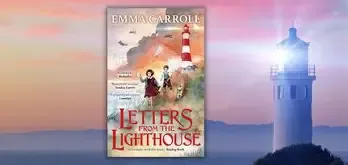
Our class novel this term will be 'Letters from the Lighthouse by Emma Carroll'. It is a captivating historical novel set during World War II. The story follows a young girl named Olive and her younger brother, Cliff, who are evacuated to a coastal village after the air raids in London become too dangerous. While staying at a lighthouse, they discover a hidden letter that unveils a mysterious secret linked to the war. As they delve deeper into the letters, Olive uncovers stories of bravery, friendship, and the impact of war on their lives. This beautifully written tale captures the essence of childhood, the power of hope, and the resilience of the human spirit in the face of adversity.
Writing
The children will read a variety of fiction, non-fiction and poetry texts and will focus on developing deeper understanding of what they have learnt by practicing using different content domains.
In writing, the children will focus on:
-
Explanation text - How the circulatory system works.
- Diary (recount) - An evacuee's journey.
- Narrative - Surviving an air raid.
- Longer narrative - Danger at the Lighthouse.
History
In Year 6, students delve into the significant events and impact of World War II, exploring how it reshaped countries and societies across the globe. They learn about the causes of the war, including the rise of totalitarian regimes and the consequences of the Treaty of Versailles. Pupils study key events such as the Blitz, the D-Day landings, and the roles played by ordinary people, including children, during this tumultuous time. Through examining personal stories and historical documents, students gain insight into the hardships and resilience of those who lived through the war, helping them to understand the importance of peace and cooperation in today’s world.
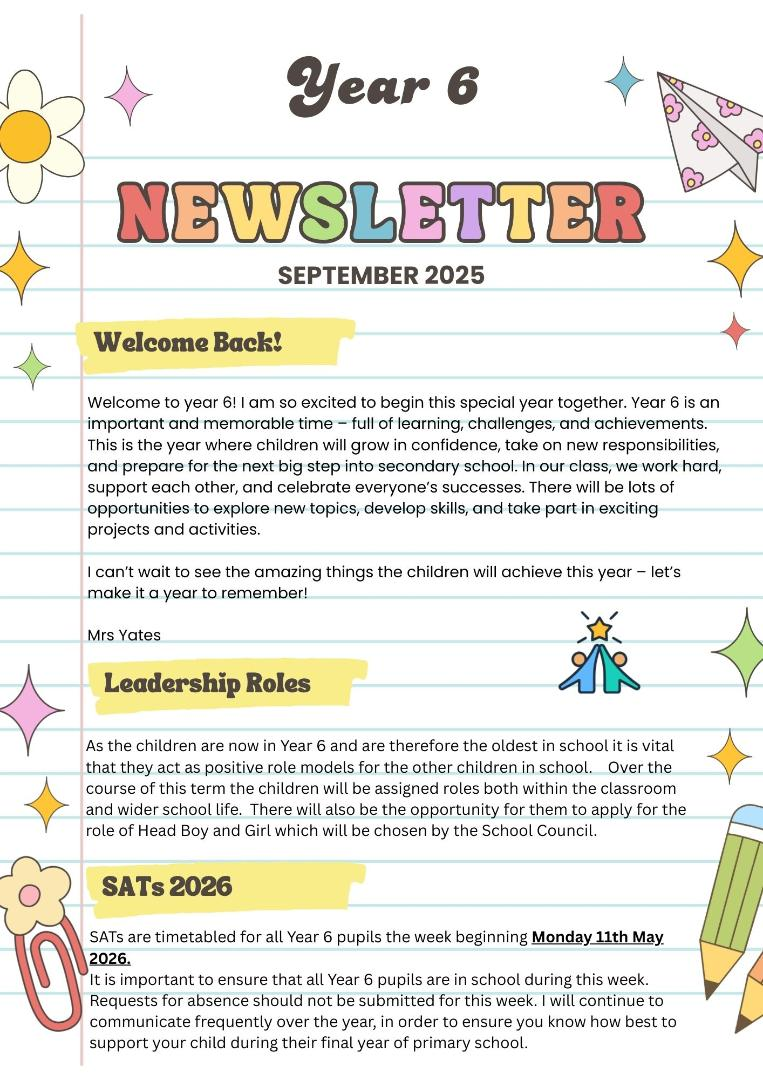
Autumn Term!
Class Newsletters
Autumn term curriculum map
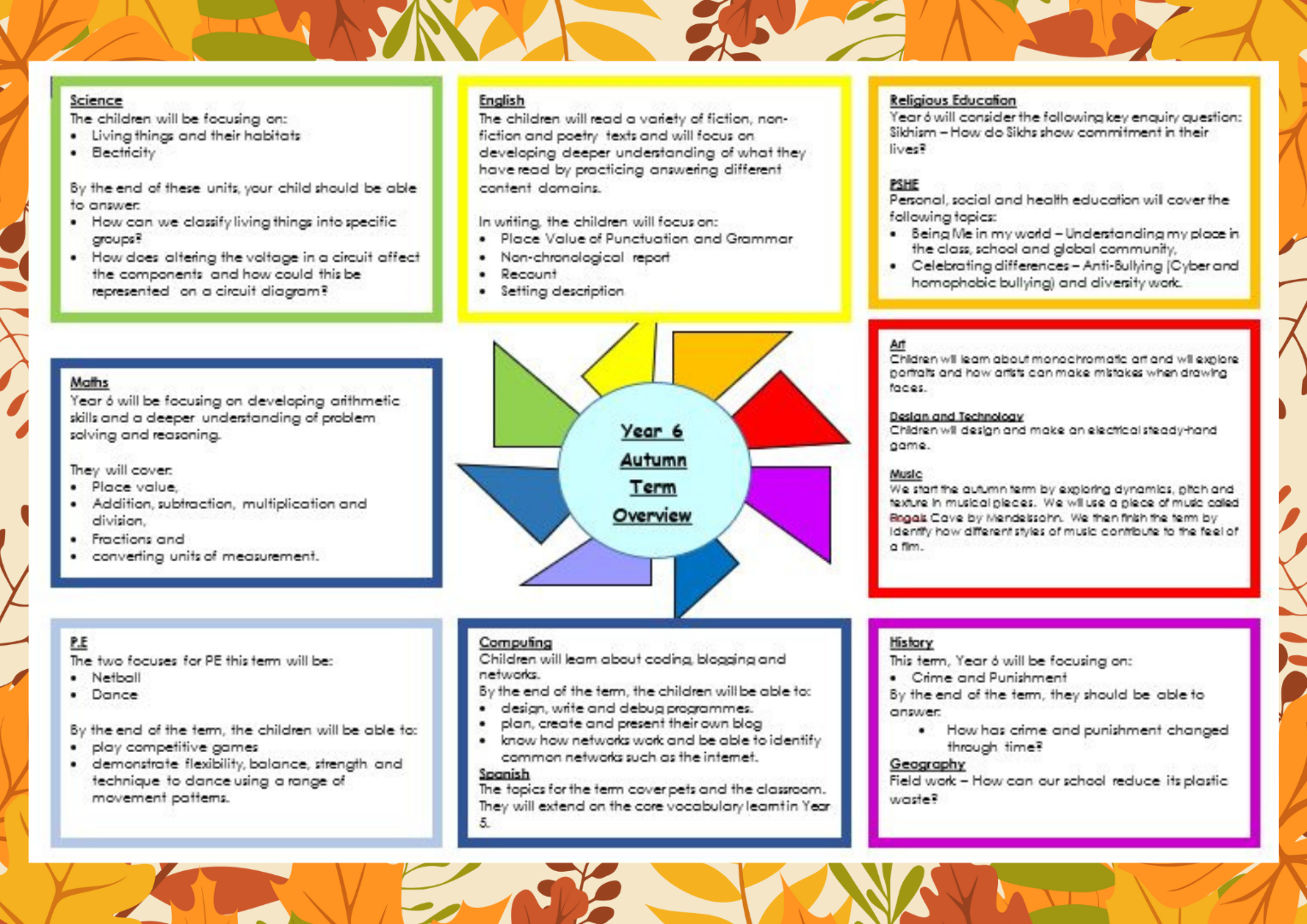
English
Reading
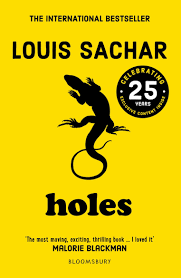
Our class text this half term will be Holes by Louis Sacha and Dracula by Bram Stoker (the abridged Ladybird version).
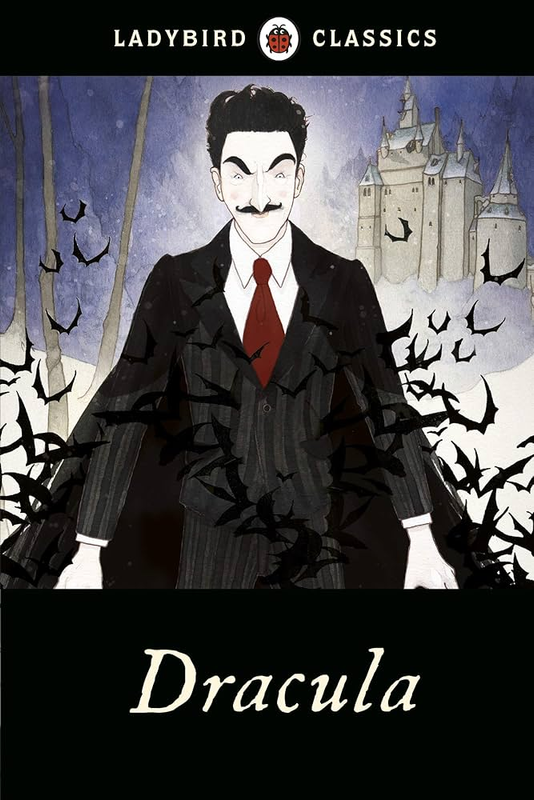
In year 6 we have daily guided reading lessons. These lessons last for 45 minutes and not only focus on comprehension but fluency, knowledge of vocabulary and prediction skills. Reading lessons in Year 6 will allow the children to experience a wide range of texts types and authors. In addition to the daily reading lessons children will experience '60 second reads' these are designed to build reading speed and stamina (a vital skill for the SATS).
Children are encouraged to read daily and reading books and reading records should be in school every day.
Writing
The children will read a variety of fiction, non-fiction and poetry texts and will focus on developing deeper understanding of what they have learnt by practicing using different content domains.
In writing, the children will focus on:
-
Place Value of Punctuation and Grammar
-
Non-chronological reports - famous outlaws
-
Recounts and letters - Harker's letter
-
Setting descriptions - Dracula's Whitby
-
Instructions - How the Grinch Stole Christmas
Maths
This half term we will focus on securing our knowledge of place value in numbers up to 1,000,000 and decimals up to 3 decimal places. We will also further develop our understanding of the four rules of number (addition, subtraction, multiplication and division) and use formal written methods to calculate with whole numbers and decimals. Later in the half term we will calculate using fractions and whole numbers. We will complete a timed (30 minutes) arithmetic test each week and will complete daily quick maths sessions to develop fluency and recall.
Fluency and Recall Practice:
Weekly practice of Times Tables (Maths Shed) is expected to support fluency and recall skills. These activities will help students become more confident in their mathematical abilities.
Children are encouraged to 'play' on Maths Shed every week. Assignments are set by us each week to try and earn more points than other class mates (and the rest of the school!) In turn, this should help them develop their knowledge of known number facts and increase their confidence in spelling.
Come on Year 6- let's be the best!
History
This half term we will be learning all about Crime and Punishment.
In this crime and punishment unit, children will build on their knowledge of periods in history that they have studied through KS2. Children will explore using different historical disciplinary concepts, how crime and punishment has changed over time in Britain. They will explore what was seen as a crime over time and the different gruesome punishments that were handed out to criminals. The children will find out about the development of the police force from the Victorian period right through to the new millennium.
Crime and Punishment Knowledge Organiser.pdf
Science
Our two focuses for Science this term are:
Living Things and their habitats
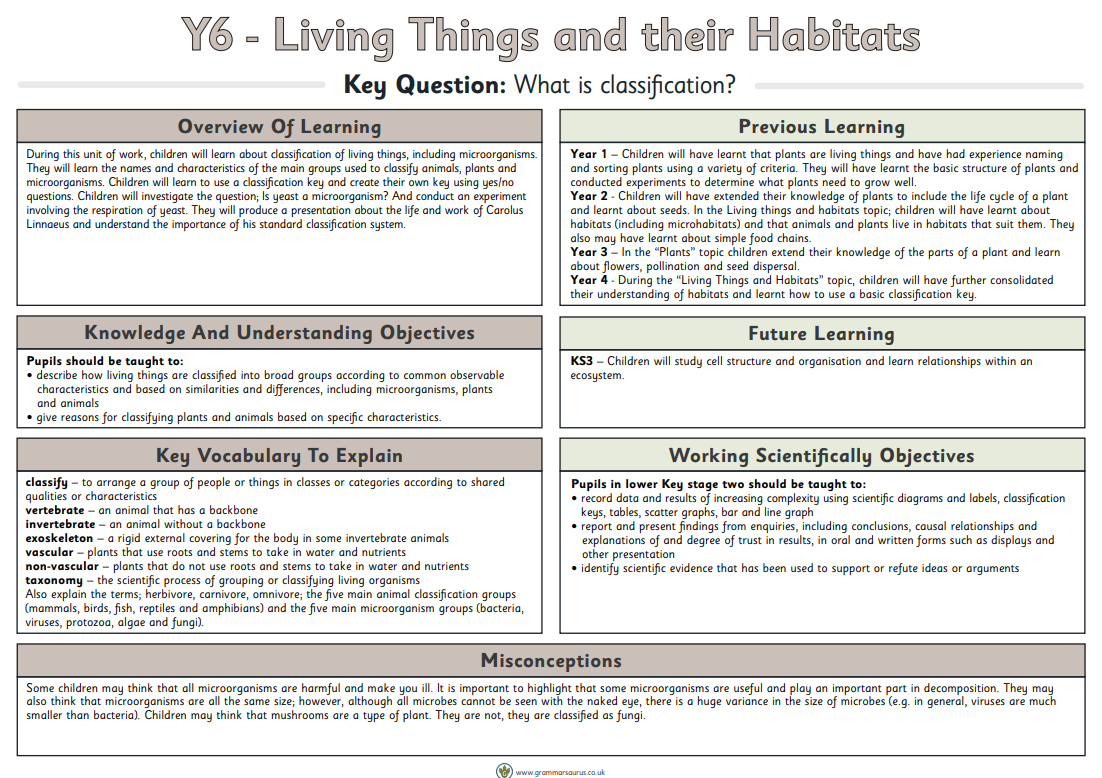
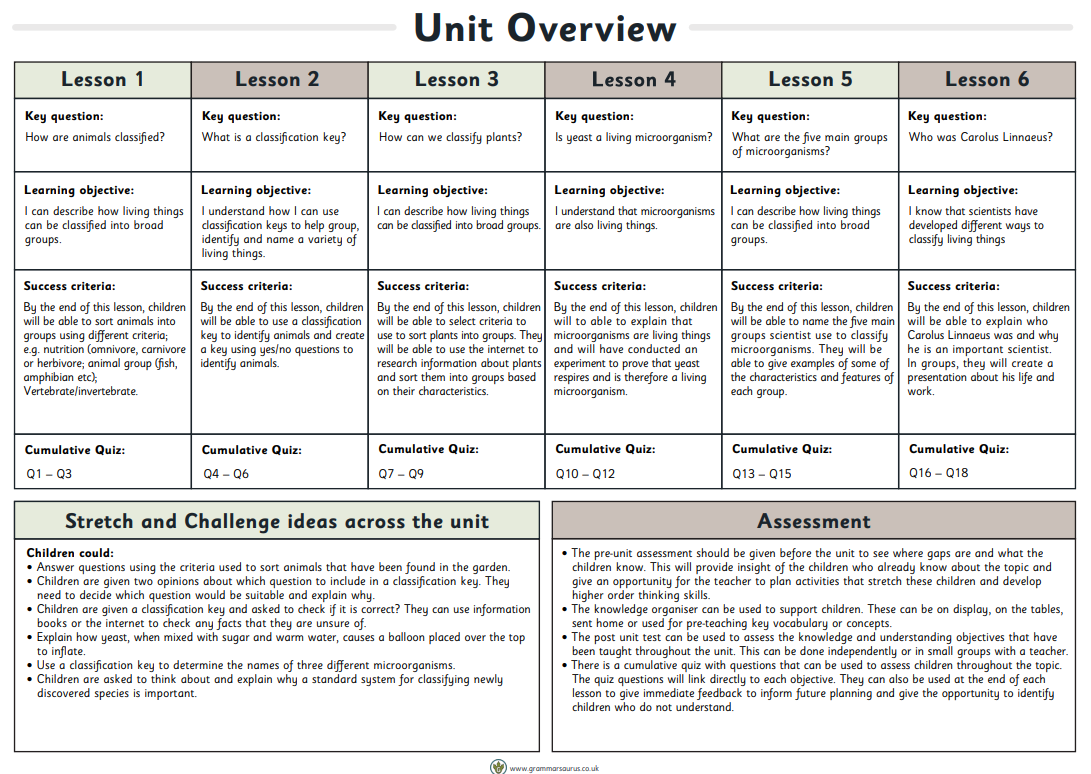
During this unit of work, children will learn about classification of living things, including microorganisms. They will learn the names and characteristics of the main groups used to classify animals, plants and microorganisms. Children will learn to use a classification key and create their own key using yes/no questions. Children will investigate the question; Is yeast a microorganism? And conduct an experiment involving the respiration of yeast. They will produce a presentation about the life and work of Carolus Linnaeus and understand the importance of his standard classification system.
Electricity
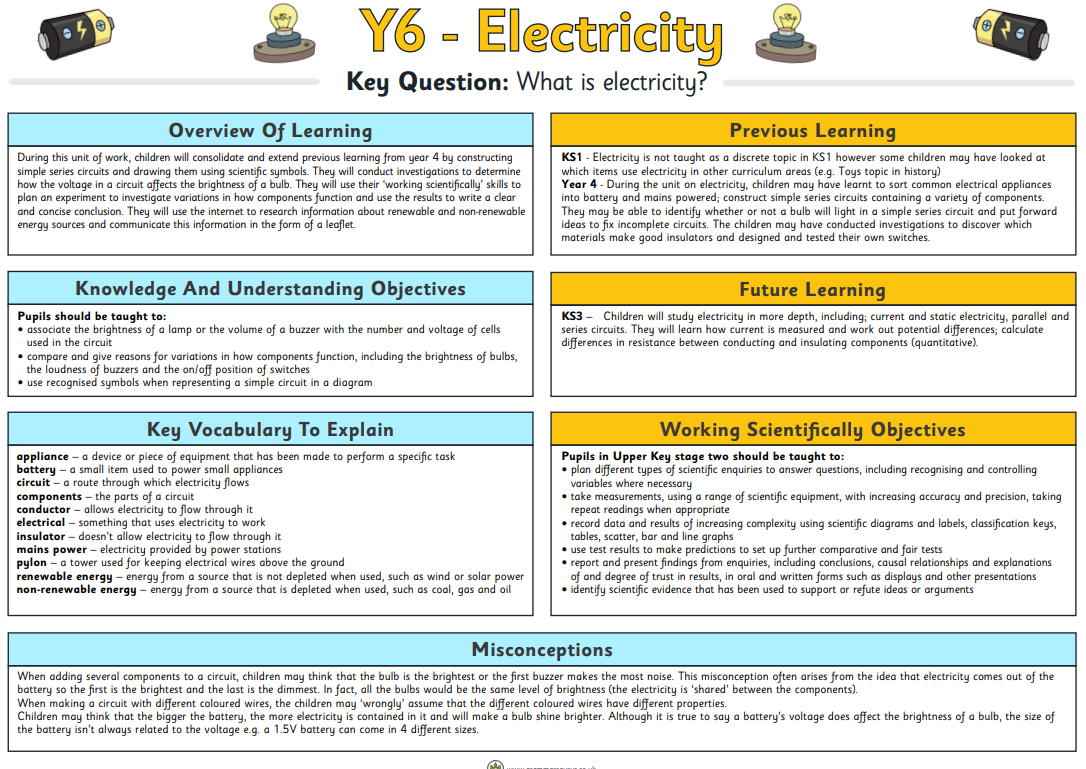
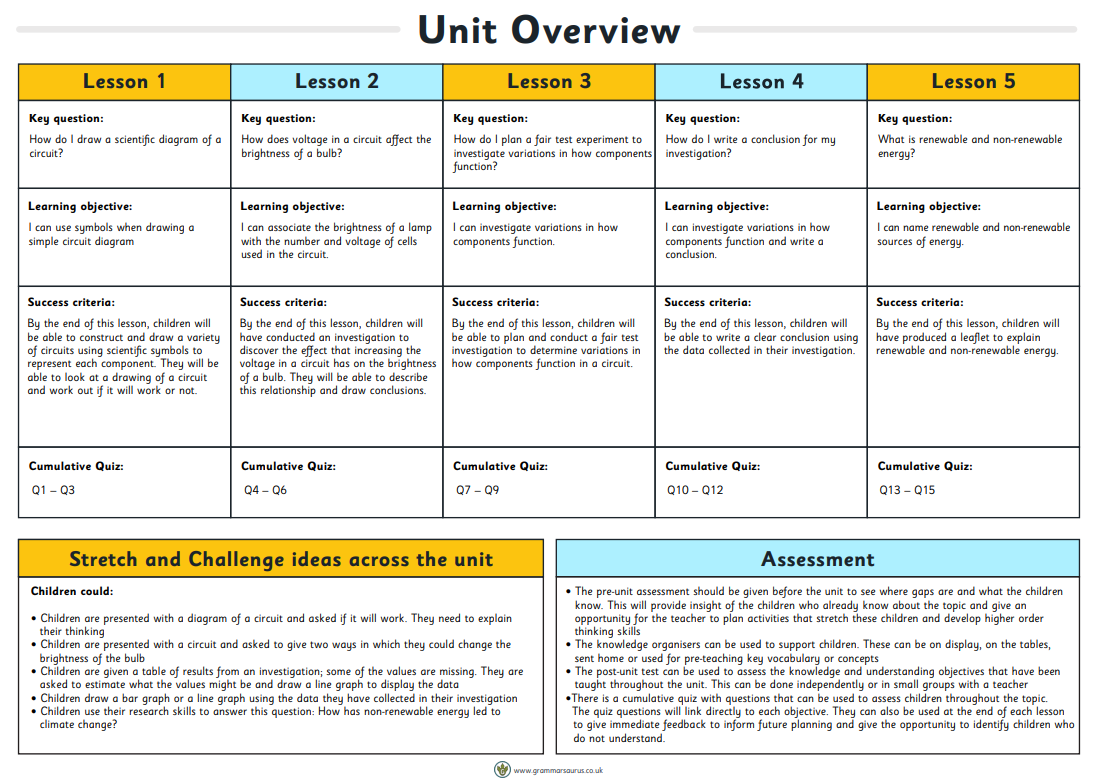
During this unit of work, children will consolidate and extend previous learning from year 4 by constructing simple series circuits and drawing them using scientific symbols. They will conduct investigations to determine how the voltage in a circuit a ects the brightness of a bulb. They will use their ‘working scientifically’ skills to plan an experiment to investigate variations in how components function and use the results to write a clear and concise conclusion. They will use the internet to research information about renewable and non-renewable energy sources and communicate this information in the form of a leaflet.
Art and Design and Design Technology
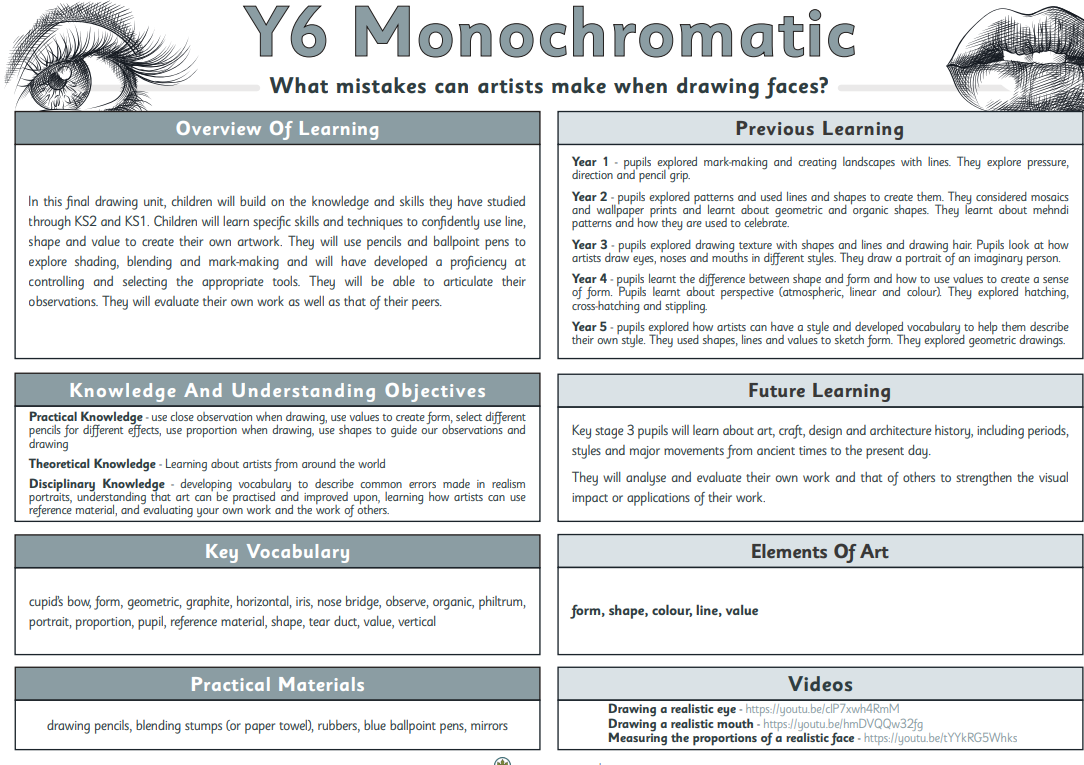
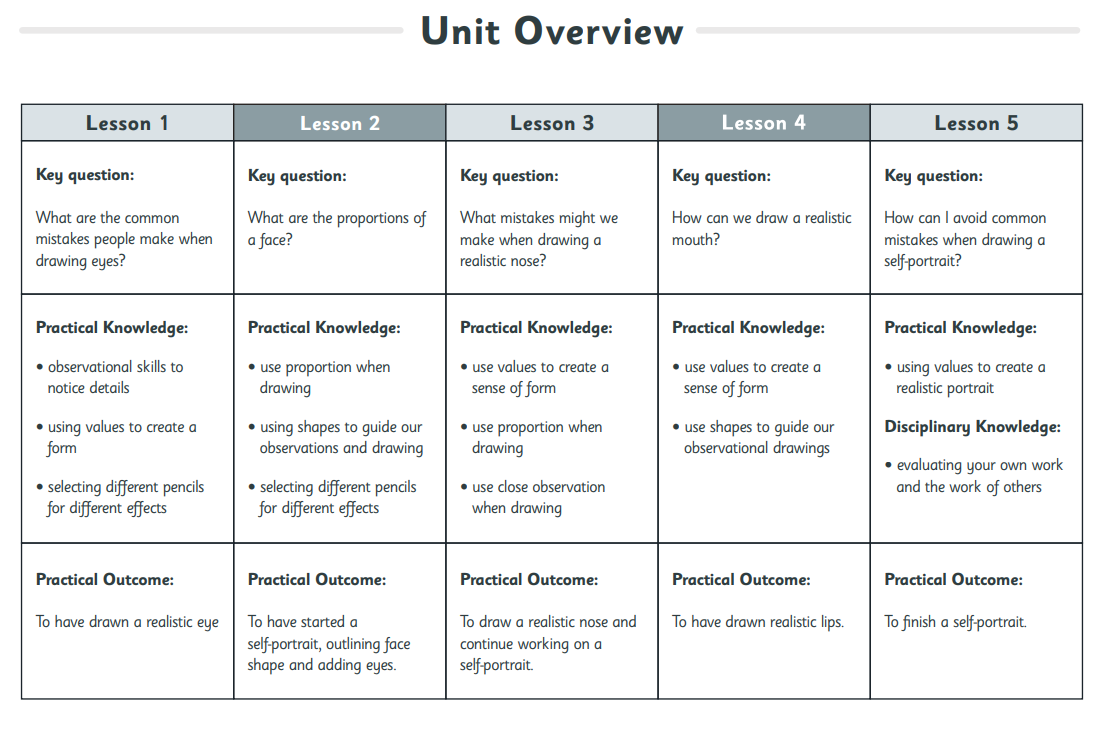
In this drawing unit, children will build on the knowledge and skills they have studied through KS2 and KS1. Children will learn specific skills and techniques to confidently use line, shape and value to create their own artwork. They will use pencils and ballpoint pens to explore shading, blending and mark-making and will have developed a proficiency at controlling and selecting the appropriate tools. They will be able to articulate their observations. They will evaluate their own work as well as that of their peers.